Three questions before automating
Every automation starts with the same audit: which task does the team repeat every day? Which decision is always the same? Which alert always arrives too late? If the answer is “answer the tracking question before it becomes a ticket”, “hand billing chats to the assistant”, “post the week's recap on Friday at nine” — you already have three flows.
The rule we follow: automate the path, never the exception. The flow handles the pattern; your team handles what's interesting.
Visible from end to end
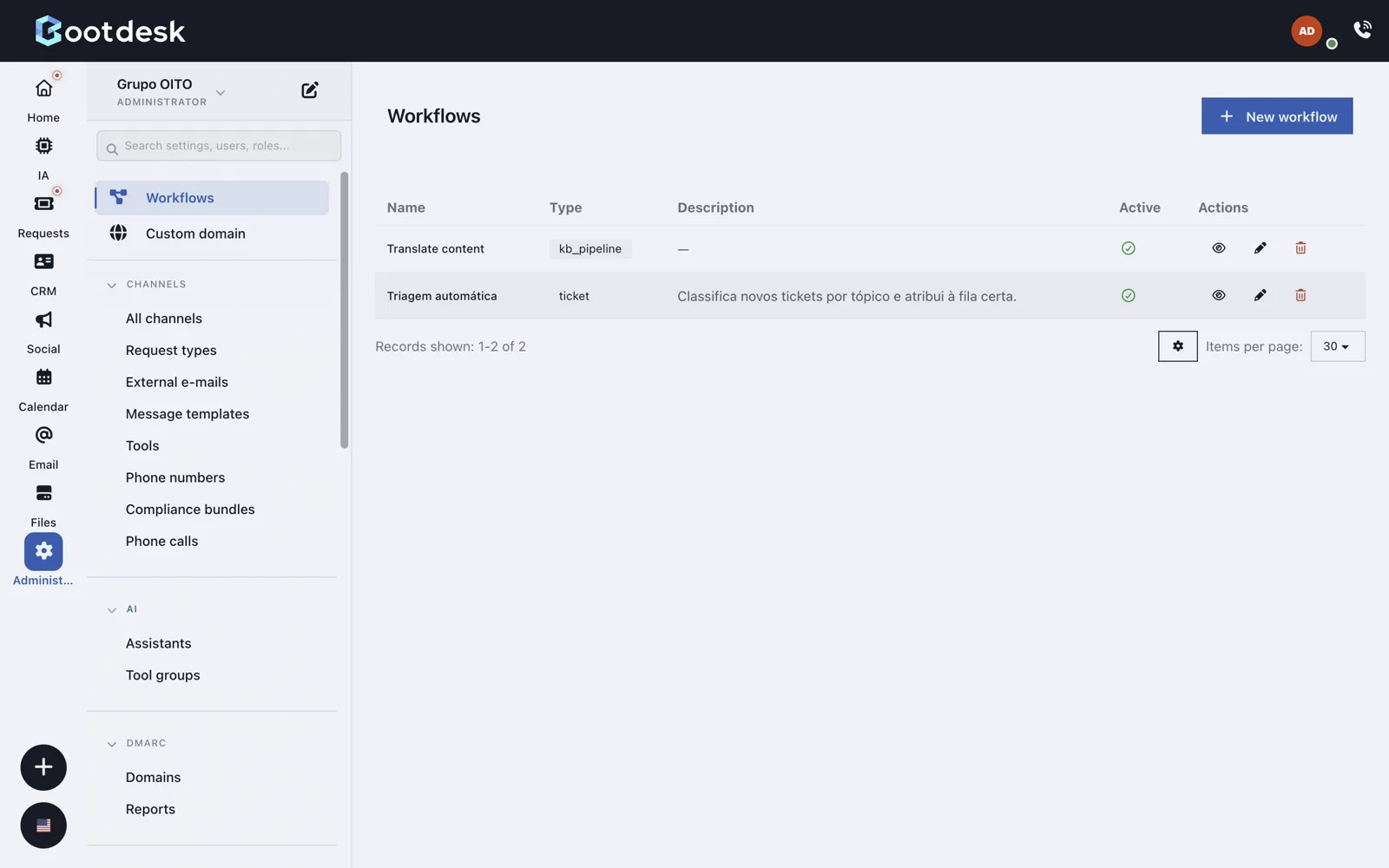
A flow nobody can see becomes superstition. Every BootDesk automation is a diagram: trigger, conditions, actions — with the execution history right next to it. When someone asks “why did this chat go to the assistant?”, the answer is in the log, not in the memory of whoever configured it.
Where flows live
Three kinds, covering the work that actually repeats:
Chat — an inbound message triggers the flow: conditions read the conversation, and the flow can answer, collect a choice, create a ticket, or hand the whole thing to the assistant with context packed.
CRM — a deal is created or changes stage: the flow notifies the team, logs an activity, or moves the card along.
Knowledge — the crawler walks your site, the pipeline transforms and translates the pages into knowledge-base articles your assistant will actually cite.
The calendar is automation too
Not every flow reacts to events — some fire on the clock. AI triggers run on a schedule with a timezone you pick, fire from inbound webhooks, execute scripts, and keep retry counters with a calendar view of everything.
And the social composer drafts and schedules your posts for the week. Publishing waits for your click.