The helpdesk that ignores revenue
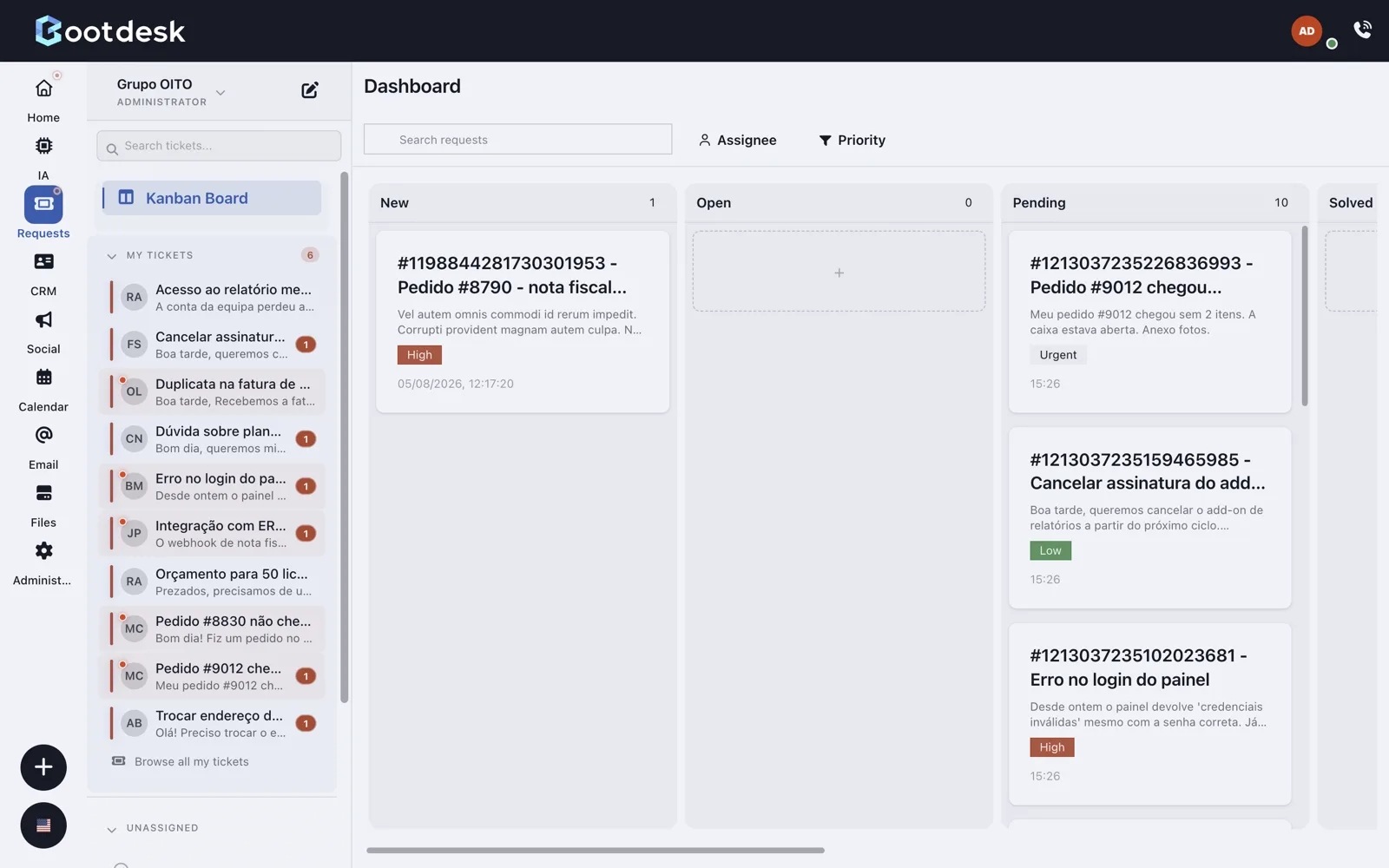
In a pure helpdesk, every customer is the same: one more line in the queue. The account that pays the bills and the one-time requester look identical — because the tool can't tell the difference.
When the CRM lives in the same place, the customer card gains the relationship: the company they belong to, the deals in motion, the whole support history. Nobody starts a conversation from zero — support sees who they're talking to.
From ticket to deal without copying anything
A customer asks for new scope in the middle of a support chat? One click — “convert to deal” — and the opportunity exists, linked to the requester, carrying the whole conversation: previous tickets, promises, attachments. Going the other way is one click too: a deal that needs a support moment becomes a ticket on any channel.
It's the same relationship with one more milestone on it. No “could you send me the context?” between teams — and every conversion logs itself on the timeline.
Numbers nobody has to paste into a spreadsheet
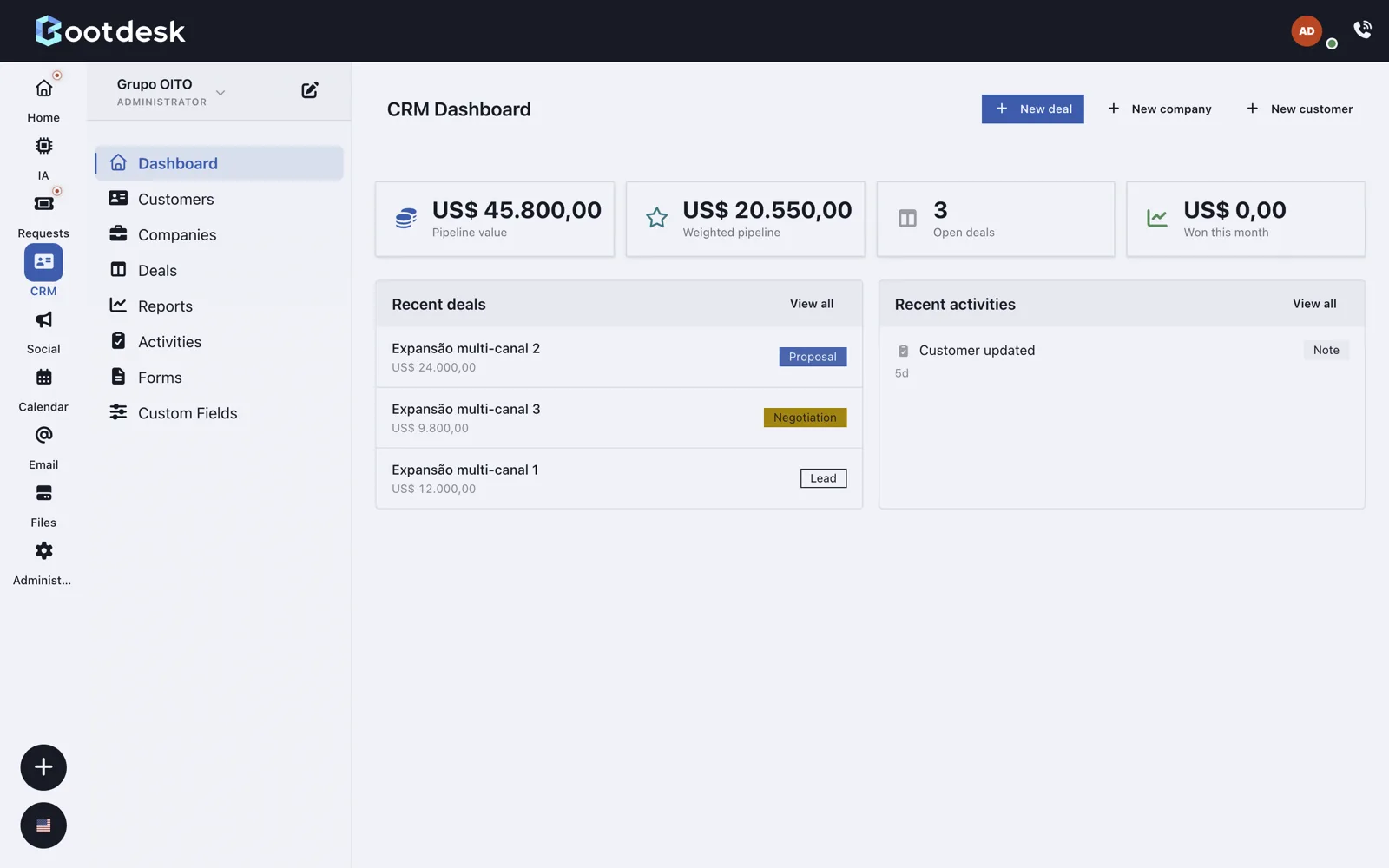
Pipeline value, weighted by probability. Win rate. Deals per stage, value per stage, monthly won-and-lost trends up to two years back. The reports are computed from the workflow as it happens — four charts and a dashboard of KPIs, not an end-of-quarter project.
Every stage change logs itself. Close a deal as lost and the board asks why — the reason lands on the timeline, next to everything else that happened.
Made to fit the work
Every business keeps different details: custom fields on deals, companies, and contacts — nine field types, your labels, drag-to-reorder. Activities with types and due dates on a shared timeline. Tags everywhere. Contacts import from CSV with a sample file and an async status webhook.
And when a deal is created or changes stage, CRM workflows fire: notify the team, log an activity, move the card — with delays and HTTP calls available when the process needs them.